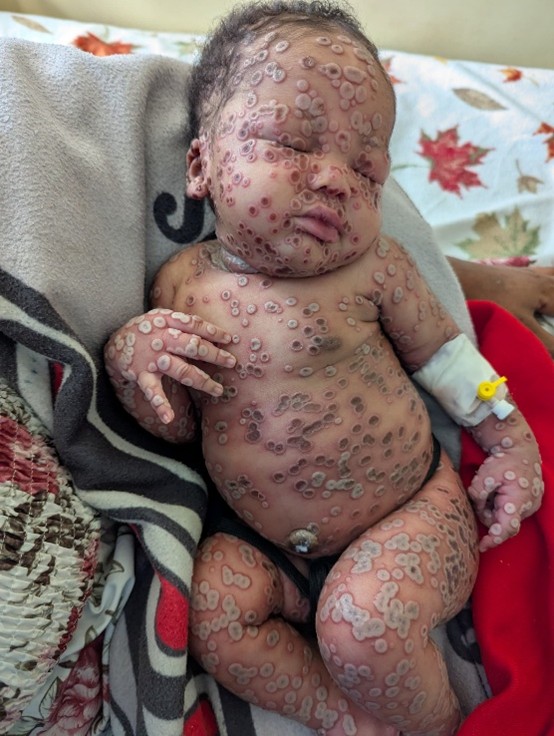
PREGMPOX will investigate the impact of the mpox virus (MPXV) on pregnancy including clinical features and materno-fetal outcomes, in order to generate data that would meaningfully contribute to public health preparedness and response for the ongoing mpox epidemic in the Democratic Republic of Congo.
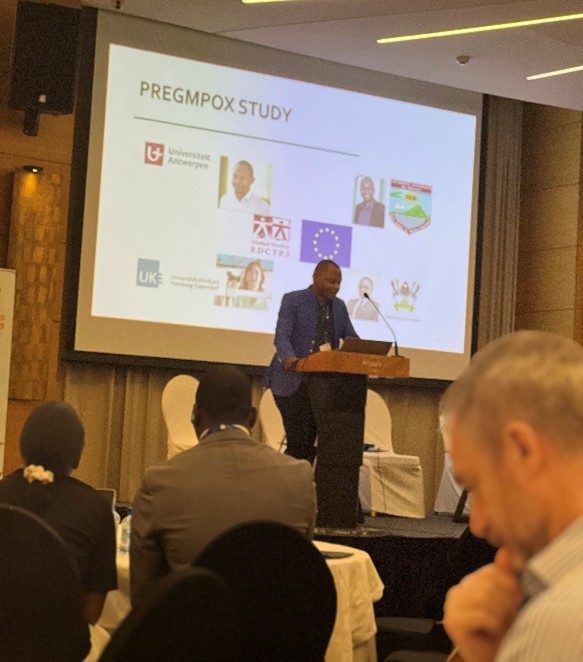
The PREGMPOX study is a 3-year prospective observational cohort with a nested case-control component designed to address critical knowledge gaps on the impact of Mpox virus (MPXV) infection during pregnancy and its consequences for maternal, fetal, and newborn health in South Kivu, Democratic Republic of Congo (DRC). Led by Professor Patrick de Marie Katoto (Université Catholique de Bukavu) and implemented through a multinational consortium involving the University of Antwerp, Universitaetsklinikum Hamburg-Eppendorf, and Makerere Lung Institute, the study represents a major regional effort to strengthen evidence on Mpox in one of the world’s most affected settings.
The primary goal is to improve understanding of how MPXV affects pregnancy outcomes, including miscarriage, stillbirth, preterm birth, and neonatal health. Specifically, the study seeks to: (1) map and monitor Mpox distribution among pregnant women through integrated surveillance and community engagement; (2) investigate the effects of infection on pregnancy outcomes, immune responses, and placental pathology; and (3) assess the safety and effectiveness of MVA-BN vaccination and MPXV therapeutics in pregnancy, including adverse effects surveillance.
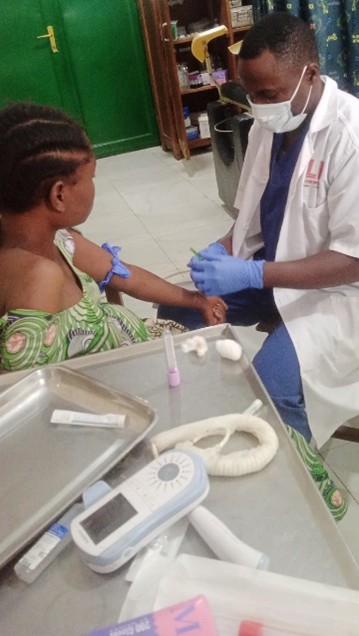
PREGMPOX will recruit approximately 2,000 pregnant women across selected Mpox hotspot zones in South Kivu, including Miti-Murhesa, Nyangezi, Uvira, Kamituga, Walungu, Katana, and Bukavu. This sample size is expected to identify at least 75 MPXV-infected pregnant women and 150 matched uninfected controls, based on an estimated 5% infection prevalence. A nested placental pathology and immunology sub-study will include 50 infected and 50 control mothers. Recruitment combines active surveillance—routine antenatal screening, clinical assessments, symptom screening, and PCR confirmation—with passive surveillance through health records review and identification of previously diagnosed or vaccinated women. This dual strategy is intended to capture both symptomatic and asymptomatic infections.
Eligibility includes all pregnant women residing within participating facility catchment areas, regardless of age, with both symptomatic and asymptomatic individuals included. Exclusions include non-consent, plans to relocate, or participation in conflicting clinical trials. Ethical implementation is guided by Good Clinical Practice and the Declaration of Helsinki, with strong emphasis on informed consent and participant safety.
Methodologically, the study applies robust epidemiological and statistical approaches. Multiple logistic regression will identify infection risk factors and adverse outcomes, while Generalised Linear Mixed Models will account for clustering across health facilities. Survival analyses, including Kaplan-Meier and Cox proportional hazards models, will evaluate infection timing, delivery outcomes, and treatment effectiveness. Vaccine effectiveness will be estimated using relative risk reduction methods. These methods allow the study to evaluate both disease burden and intervention impact comprehensively.
Overall, PREGMPOX is positioned as a landmark maternal-child health and outbreak research initiative. By integrating surveillance, immunology, placental pathology, and intervention evaluation, it aims to generate urgently needed evidence to inform Mpox prevention and treatment guidelines for pregnant women in outbreak-prone, resource-limited settings. Its findings could significantly shape public health policy, vaccination strategies, and maternal care protocols for emerging infectious diseases in Africa and beyond.
Consortium partners
Funders
Project duration
August 2024 – January 2027
Research area
Target population
Pregnant women
Geographical scope
Africa, the Democratic Republic of Congo, South Kivu
Study design
Main study: Prospective observational cohort
Sub-study: (Nested) case-control
Ngoma DB, Ntererwa IN, Irenge AB, Mweze MC, Katoto PMC, Lupande DM, Fodjo JNS, Noë P, Otiti JS, Kabesha TB, Colebunders R, Van Dijck C, Liesenborghs L, Mbala-Kingebeni P, Yeh S, Mwanza JC. PLOS Glob Public Health. 2026 Feb 18;6(2):e0005971. doi: 10.1371/journal.pgph.0005971.
Vakaniaki EH, Barhishindi I, Mubiala A, Malembaka EB, Braunack-Mayer L, Nganga B, Sabiti Nundu S, Brosius I, Bracke S, Bangwen E, De Vos E, Colebunders R, Ngale M, Kayembe G, Tshongo C, Dilu A, Tshimanga C, Biampata JL, Bugeme PM, Ntamabyaliro N, Kirenga B, Wayengera M, Siewe Fodjo JN, Lupande Mwenebitu D, Rimoin AW, Wawina-Bokalanga T, Vercauteren K, Mukadi-Bamuleka D, Muyembe-Tamfum JJ, Krasemann S, Kindrachuk J, Azman AS, Nussenblatt V, Crozier I, Dodd LE, Tshiani-Mbaya O; MBOTE-SK Consortium; PREGMPOX Consortium; PALM007 Consortium; Uvira Study Group; Low N, Katoto PDMC, Mbala-Kingebeni P, Liesenborghs L. Lancet. 2026 Jan 17;407(10525):256-266. doi: 10.1016/S0140-6736(25)02309-8.
Three Cases of Vertical Transmission of Clade Ib Mpox Virus.
Vakaniaki EH, Kuispond NS, Hirata Y, Bangwen E, Brosius I, Kinganda-Lusamaki E, Ozono S, Katano H, Ndunge LG, Mulopo-Mukanya N, Tshomba JC, De Vos E, Van Dijck C, Munganga P, Mukari G, Mujula Y, Mambo DM, Kitwanda SB, Maliyamungu-Bubala N, Mutimbwa-Mambo L, Crozier I, Dodd LE, Tshiani-Mbaya O, Lebwaze BM, Malembaka EB, Barhishindi I, Krasemann S, Colebunders R, Katoto PDMC, Makiala-Mandanda S, Kindrachuk J, Rimoin AW, Muyembe-Tamfum JJ, Mukadi-Bamuleka D, Wawina-Bokalanga T, Nundu SS, Suzuki T, Chirimwami RB, Liesenborghs L, Mbala-Kingebeni P. N Engl J Med. 2025 Jun 19;392(23):2385-2387. doi: 10.1056/NEJMc2503347.
Krasemann S, Fodjo JNS, Mohamed OAA, Barhishindi I, Tshongo C, Bisimwa AK, Bapolisi WA, Colebunders R, Bahizire E, Liesenborghs L, Mbala-Kingebeni P, Katoto PDMC. Lancet Infect Dis. 2025 Apr;25(4):372-374. doi: 10.1016/S1473-3099(25)00152-5.
Mpox outbreak-tecovirimat resistance, management approaches, and challenges in HIV-endemic regions.
Bapolisi WA, Krasemann S, Wayengera M, Kirenga B, Bahizire E, Malembaka EB, Siewe Fodjo JN, Colebunders R, Katoto PD. Lancet Infect Dis. 2024 Nov;24(11):e672-e673. doi: 10.1016/S1473-3099(24)00591-7.