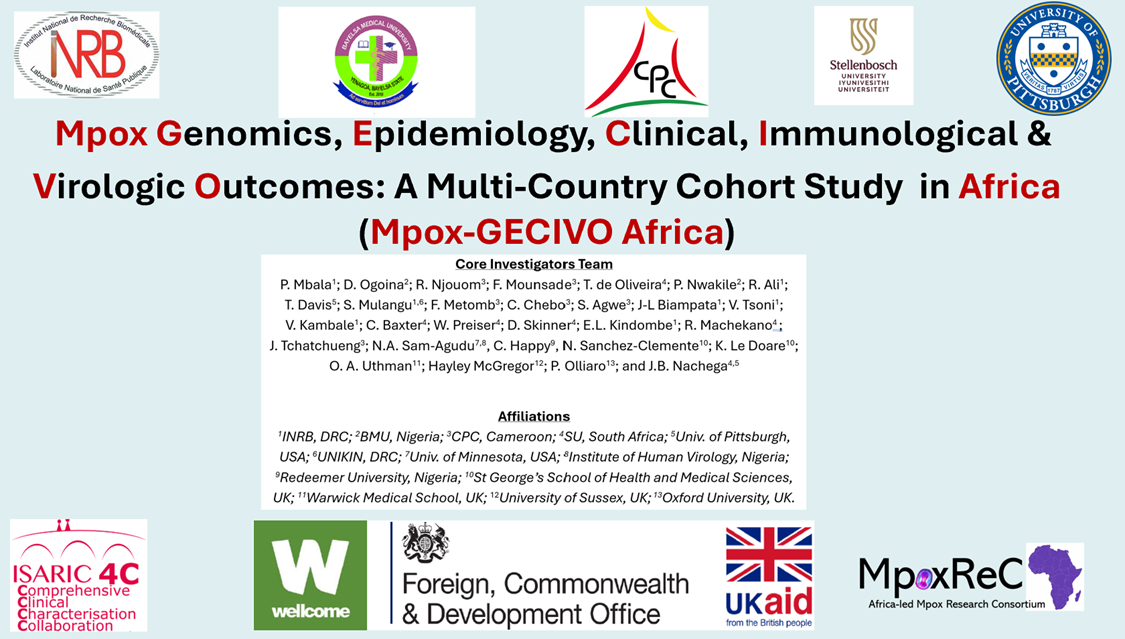
The goal of this project is to Integrate genomic, clinical, epidemiological, and socio-behavioral data that will provide key insights into clade evolution, transmission pathways, and outcomes.
Mpox has rapidly evolved from a historically neglected zoonotic disease into a major global public health threat, driven by viral adaptation, expanding human-to-human transmission, shifting sexual and household networks, and declining orthopoxvirus immunity. Since 2022, mpox has spread across more than 100 countries, while Central and West Africa—particularly the Democratic Republic of the Congo (DRC)—remain the epicenter of the highest disease burden, with increasing pediatric morbidity, severe disease, and the emergence of the highly transmissible Clade Ib lineage. In response to escalating transmission, the World Health Organization declared mpox a Public Health Emergency of International Concern in August 2024.
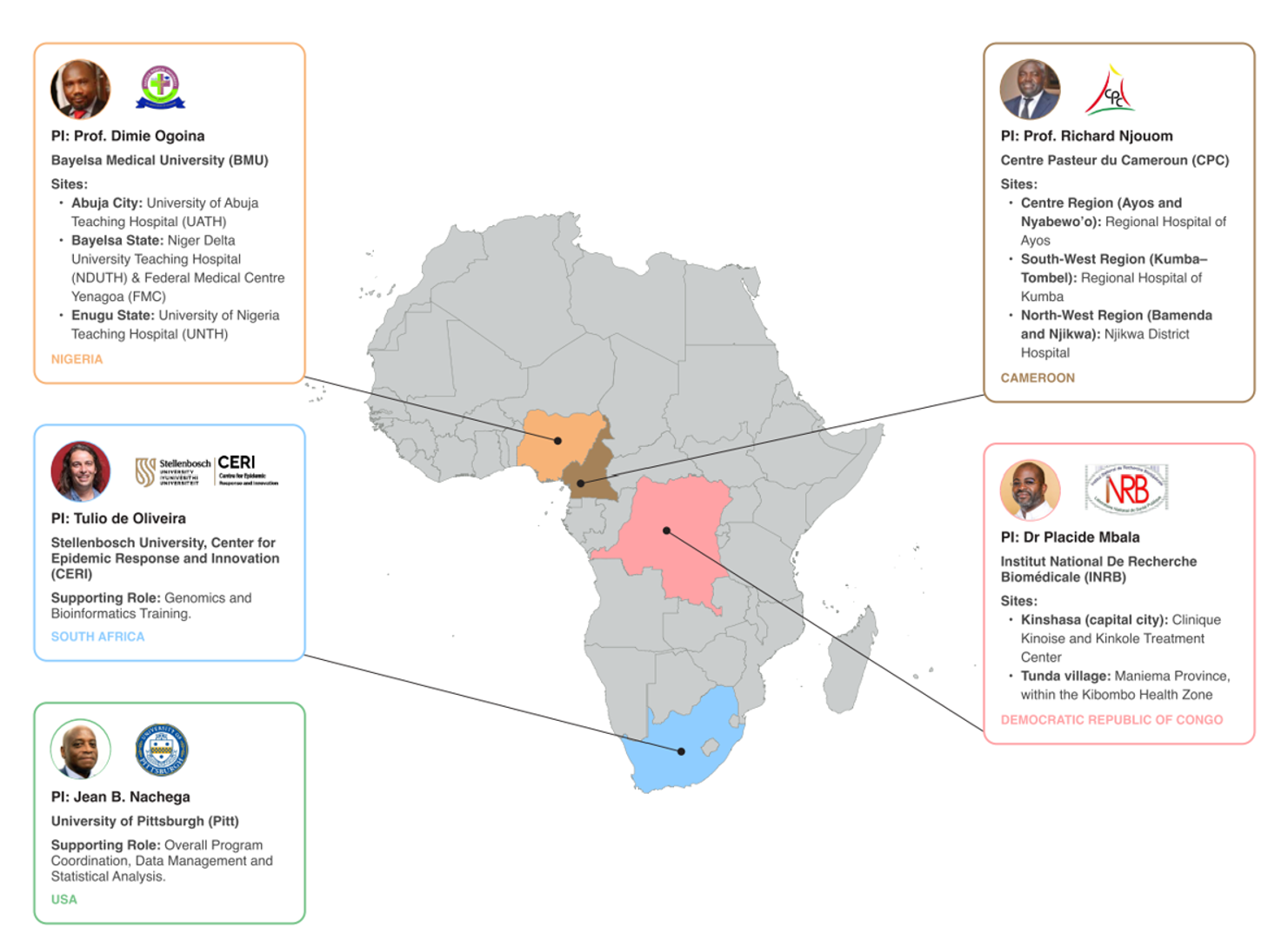
Mpox-GECIVO Africa (Mpox Genomics, Epidemiology, Clinical, Immunological and Virological Outcomes) is a first-in-Africa, multi-country, integrated observational research platform designed to generate real-time, policy-relevant evidence to strengthen mpox prevention, preparedness, and response. Implemented in the DRC, Cameroon, and Nigeria, the study uniquely captures the full diversity of circulating MPXV clades (Ia, Ib, IIa, IIb), transmission pathways (zoonotic, household, sexual, and healthcare-associated), and disproportionately affected populations.
The program combines four synergistic research pillars: (1) community-based surveillance and incidence estimation; (2) clinical, virological, and immunological characterization; (3) real-time genomics, phylogenetics, and phylodynamics; and (4) socio-behavioural and health systems research. Three longitudinal cohorts will be followed over 12 months: (i) community cohorts including children, adults, and pregnant/breastfeeding women; (ii) key populations including healthcare workers, people living with HIV, GBMSM, and sex workers; and (iii) PCR-confirmed clinical mpox patients.
By integrating epidemiological, clinical, immunological, behavioural, and genomic data, Mpox-GECIVO Africa will define clade-specific disease severity, incidence, transmission dynamics, immune correlates of protection, and viral evolution across diverse African settings. The study will directly inform WHO, Africa CDC, and national public health strategies while building durable Africa-led scientific infrastructure, genomic surveillance capacity, and regional outbreak preparedness. Beyond addressing the current epidemic, Mpox-GECIVO Africa establishes a scalable continental platform for responding to future emerging and re-emerging infectious disease threats.
Honourable mention
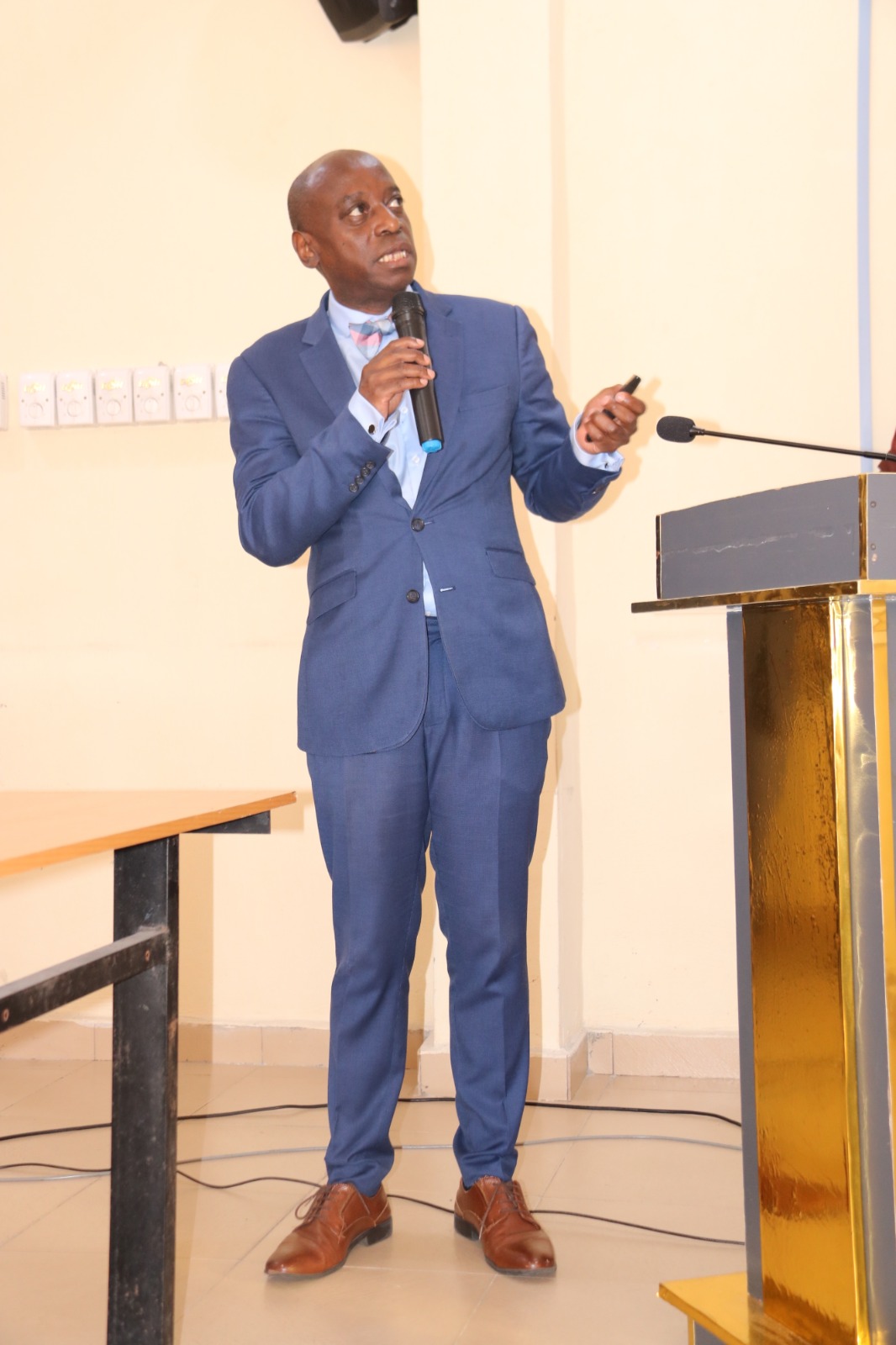
Project lead professor Jean B. Nachega was honored by the European Union’s Global Health EDCTP3 initiative as one of 10 selected leaders driving progress in global health research and innovation in 2026.
Consortium partners
Funders
Project duration
January 2025 – December 2027
Research area
Target population
All (Adults, Children/Adolescents & Pregnant Women including high-risk populations-HIV, Sex Workers, MSM, Healthcare workers)
Geographical scope
Democratic Republic of the Congo, Nigeria and Cameroon
Study design
Prospective cohort study